I design the architecture, write the specs and own the quality checks; Claude Code speeds up the implementation inside them. All three are live on Azure.
Products
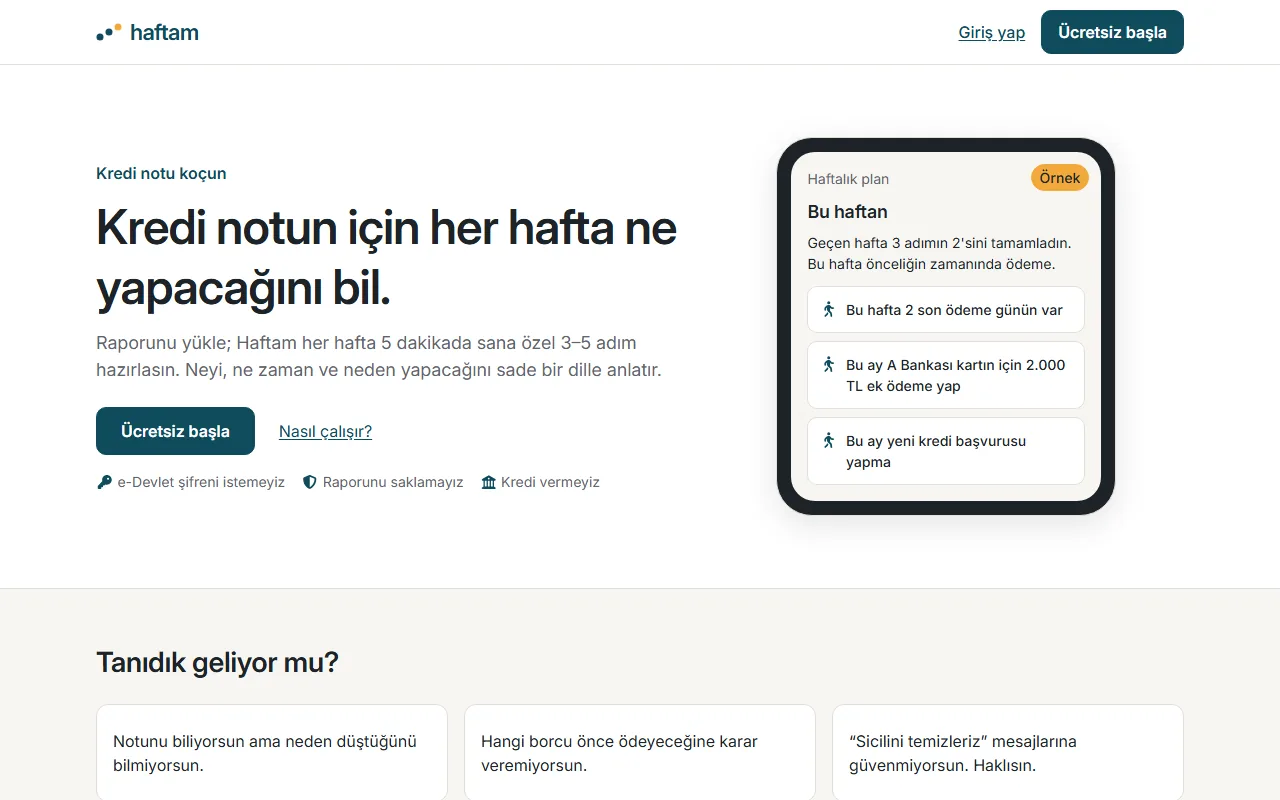
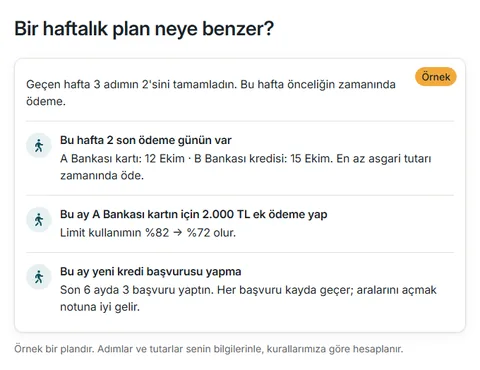
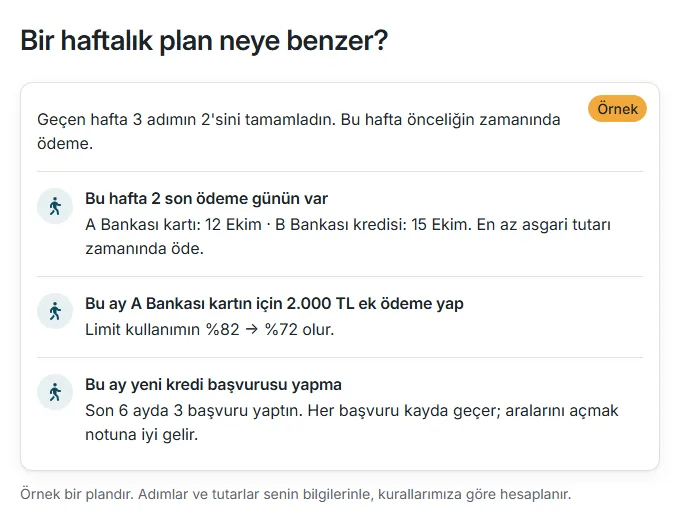
A sample weekly plan. Each step says what to do, when, and what it changes, like "limit use goes from 82% to 72%".
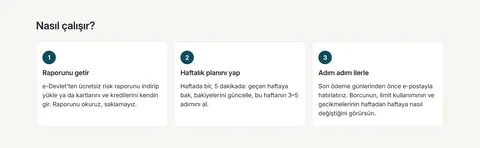
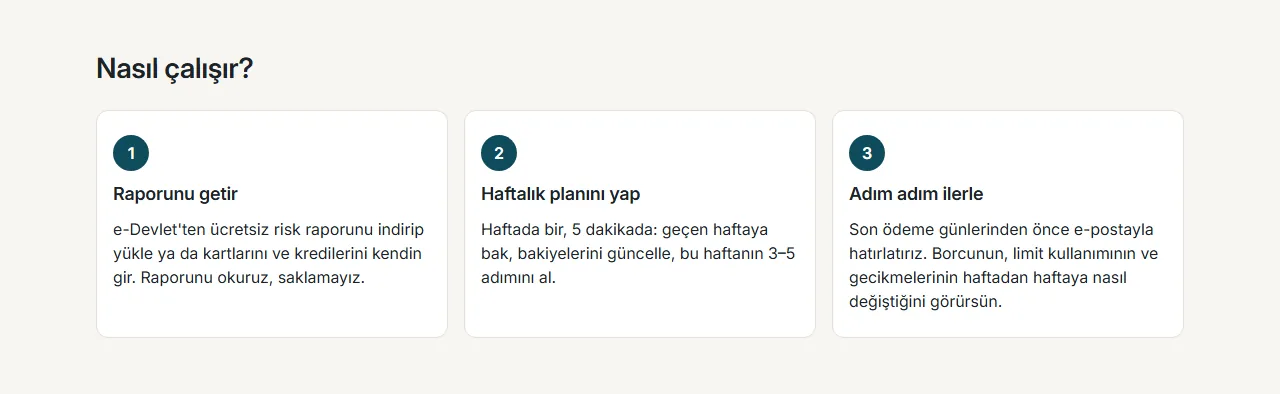
The whole product in three steps, which is also how the app is built. Bring the report, get the plan, do it step by step.
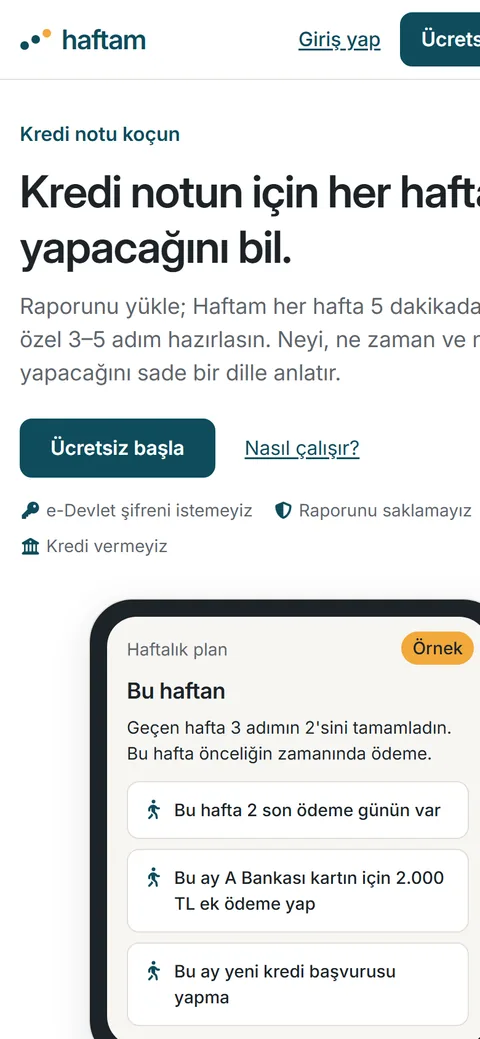
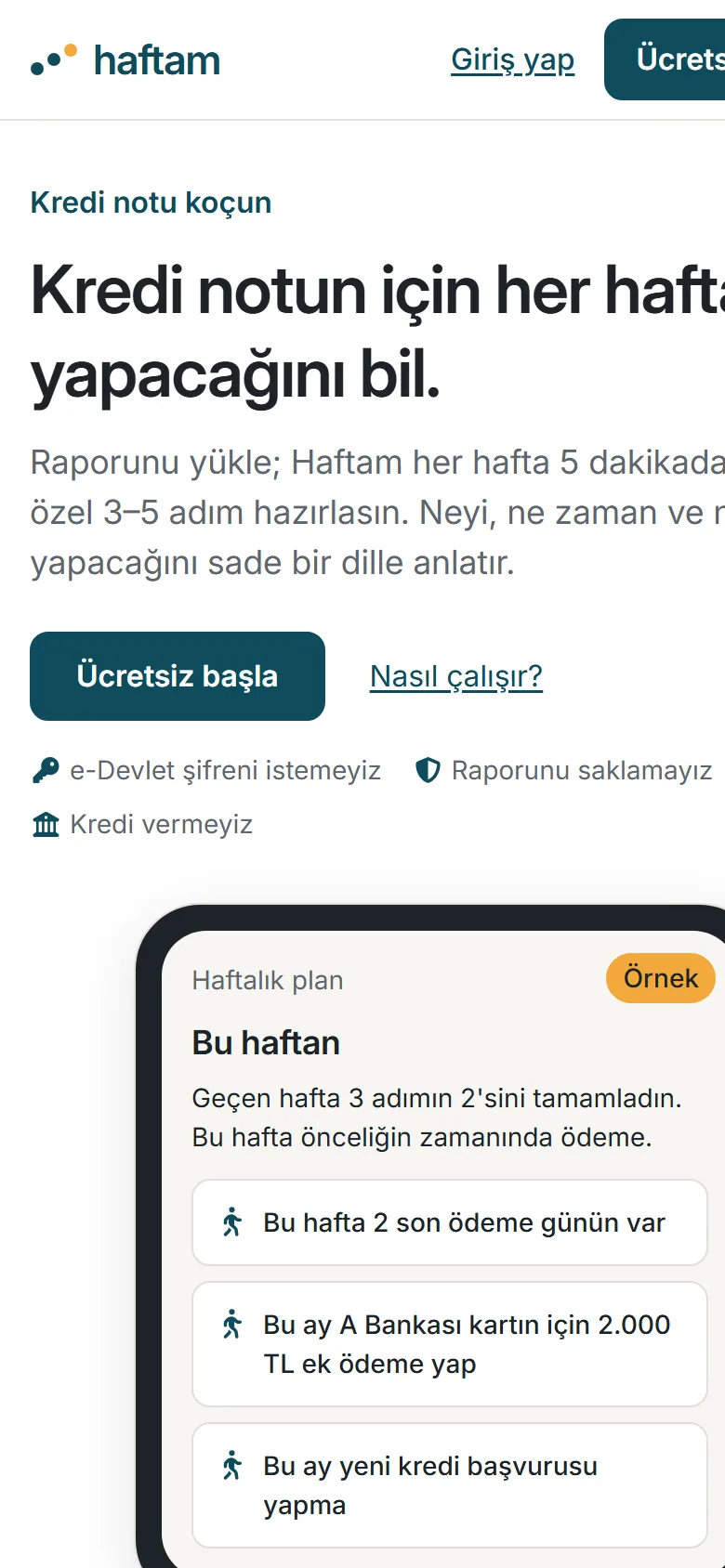
Mobile first, because most users will open their weekly plan on a phone.
Helps people in Türkiye raise their credit score with a five-minute weekly plan. Rules choose the steps; AI only writes the wording.
Reads official credit reports from e-Devlet, which arrive as an e-signature envelope around a password-protected PDF, with a rules-based reader that needs no AI.
AI is opt-in. Without the user's consent the app never calls a model, and AI features fall back to the rules reader when the model is off or fails.
Deployed from GitHub to Azure with OIDC, so no cloud password is stored anywhere; mail is sent from its own domain with SPF, DKIM and DMARC.
.NET 10
ASP.NET Core
Azure Functions
Table Storage
Angular
Claude API
Azure Communication Services
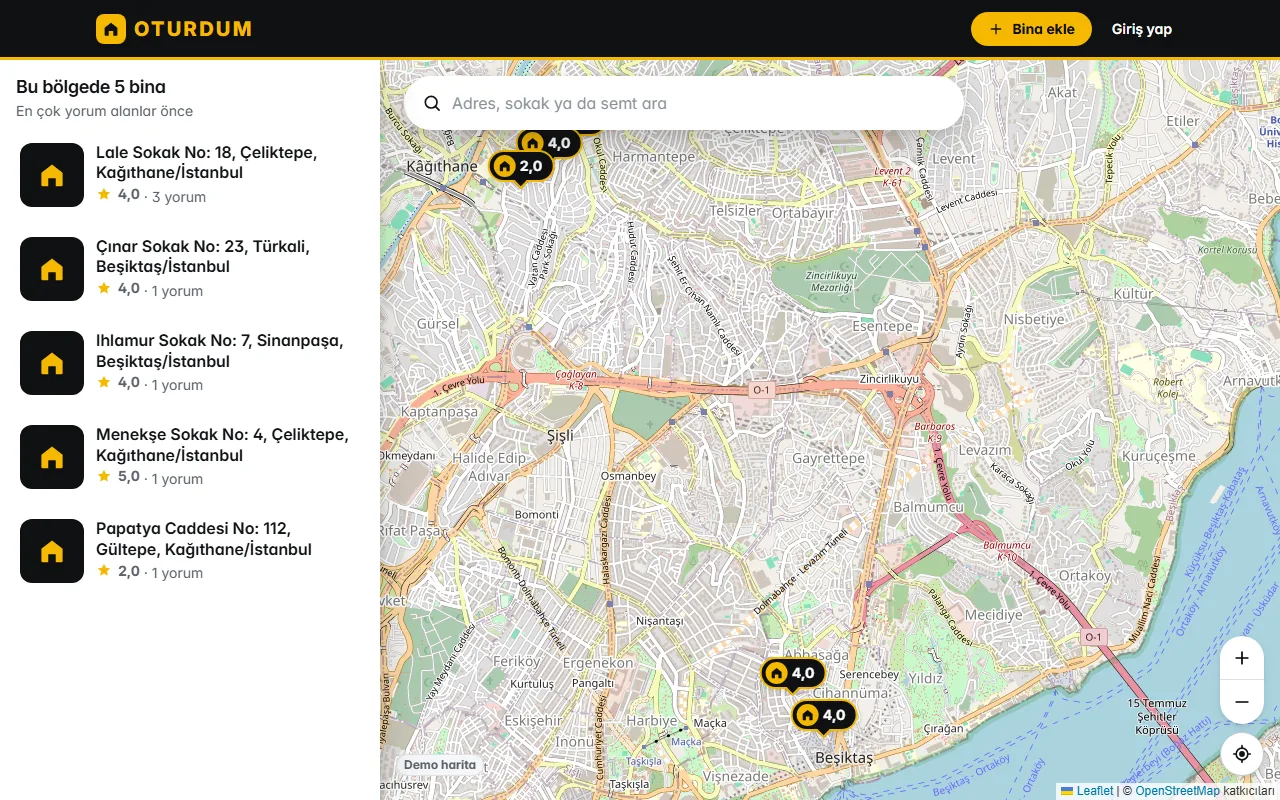
The map lists the buildings in view, most reviewed first. Only the geohash cells on screen are read.
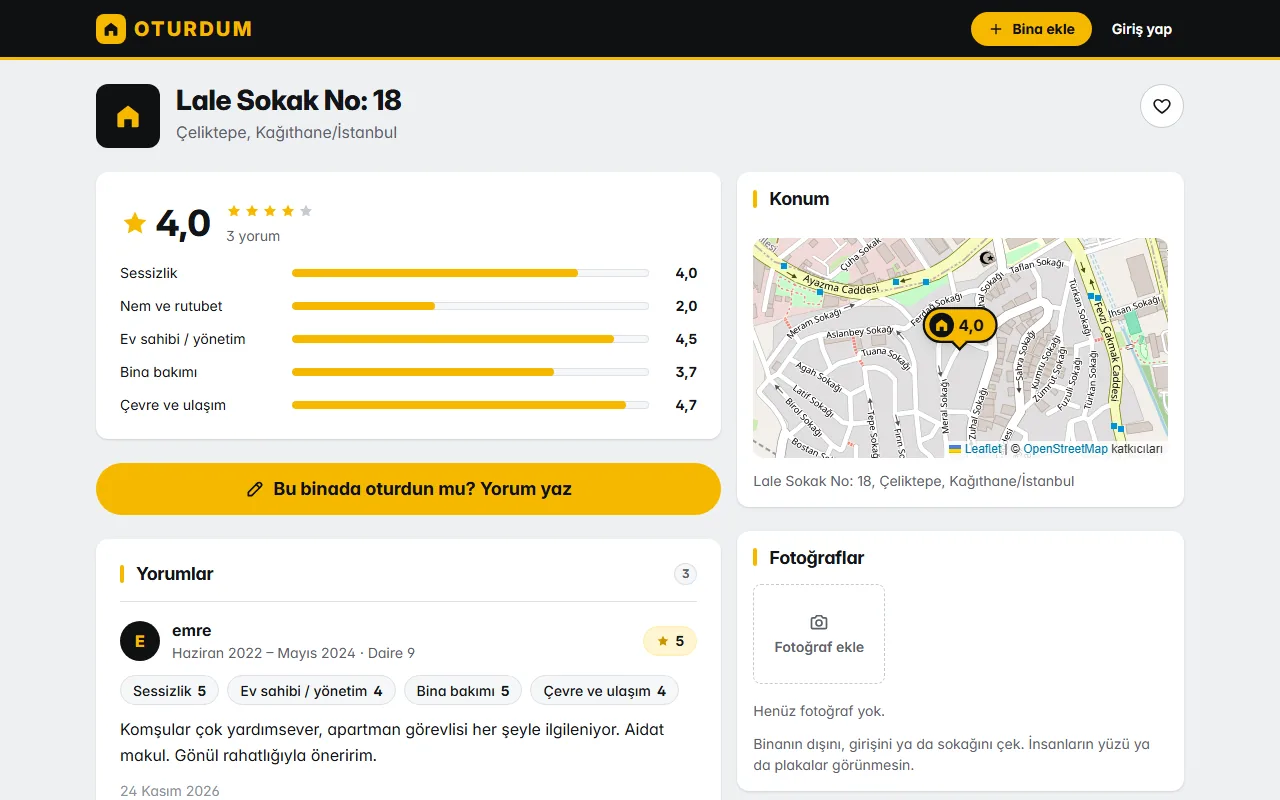
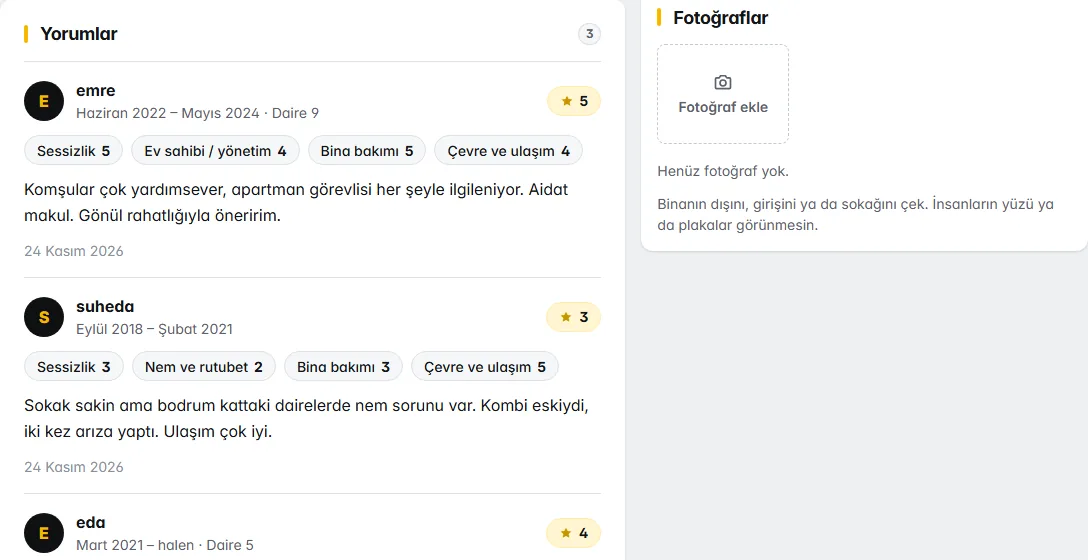
Each review keeps the dates of the stay and a score per category, so a damp flat can't hide behind a nice landlord.
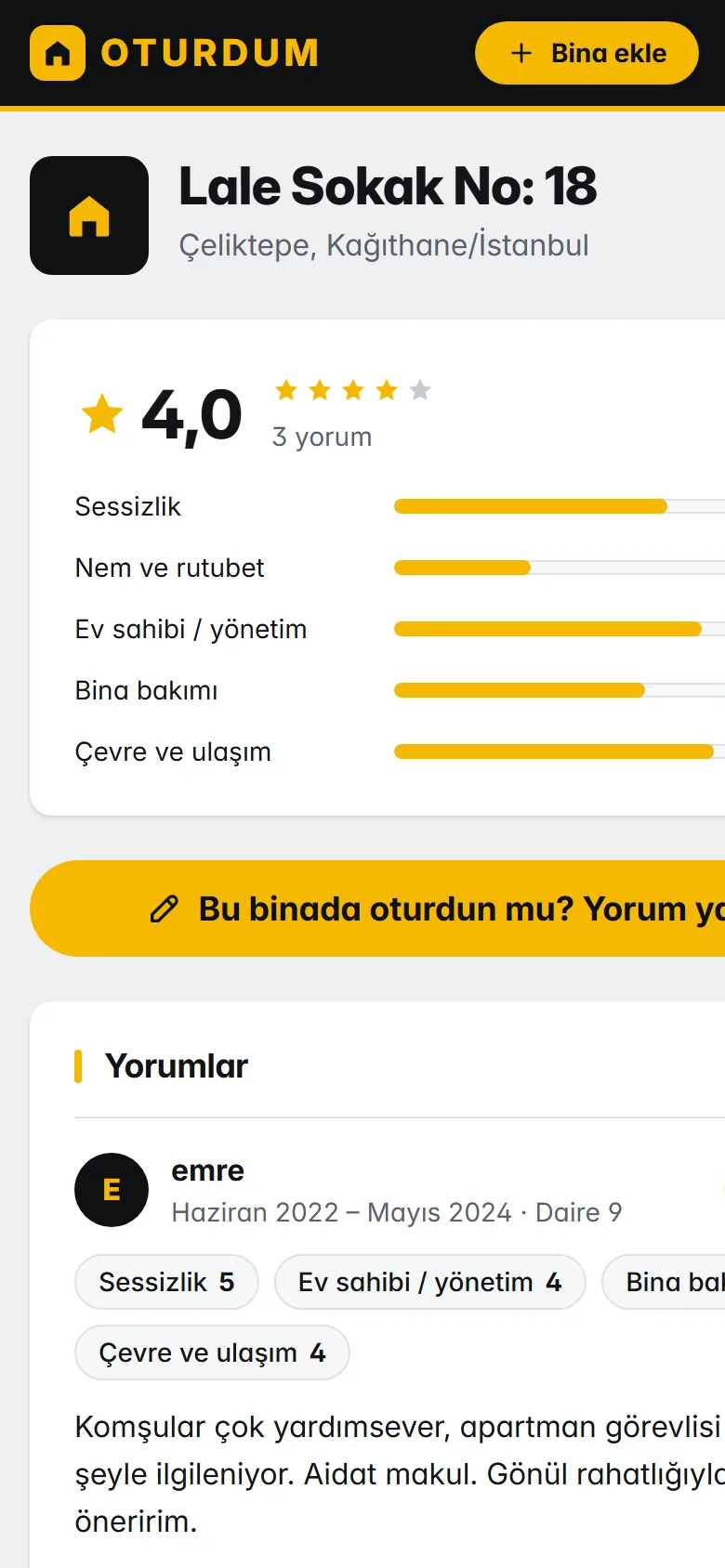
The same building page on a phone. Shown here with the built-in demo data that one command loads.
Tenants find a building on a map, read what earlier tenants wrote about it, and leave their own review. A ground-up rebuild of my 2017 Angular and Firebase site.
Map queries are split by geohash cells of about 5 km, so a map view reads only the cells it covers. I chose this over a search service to keep running costs near zero.
The map provider sits behind an adapter, so the same app runs on OpenStreetMap without a key and on Google Maps with one.
Reviews go live at once; anyone signed in can report one, and an admin can hide it, following Türkiye's content takedown law (5651).
.NET 10
ASP.NET Core
Table Storage
Blob Storage
Angular
Google Maps
Leaflet
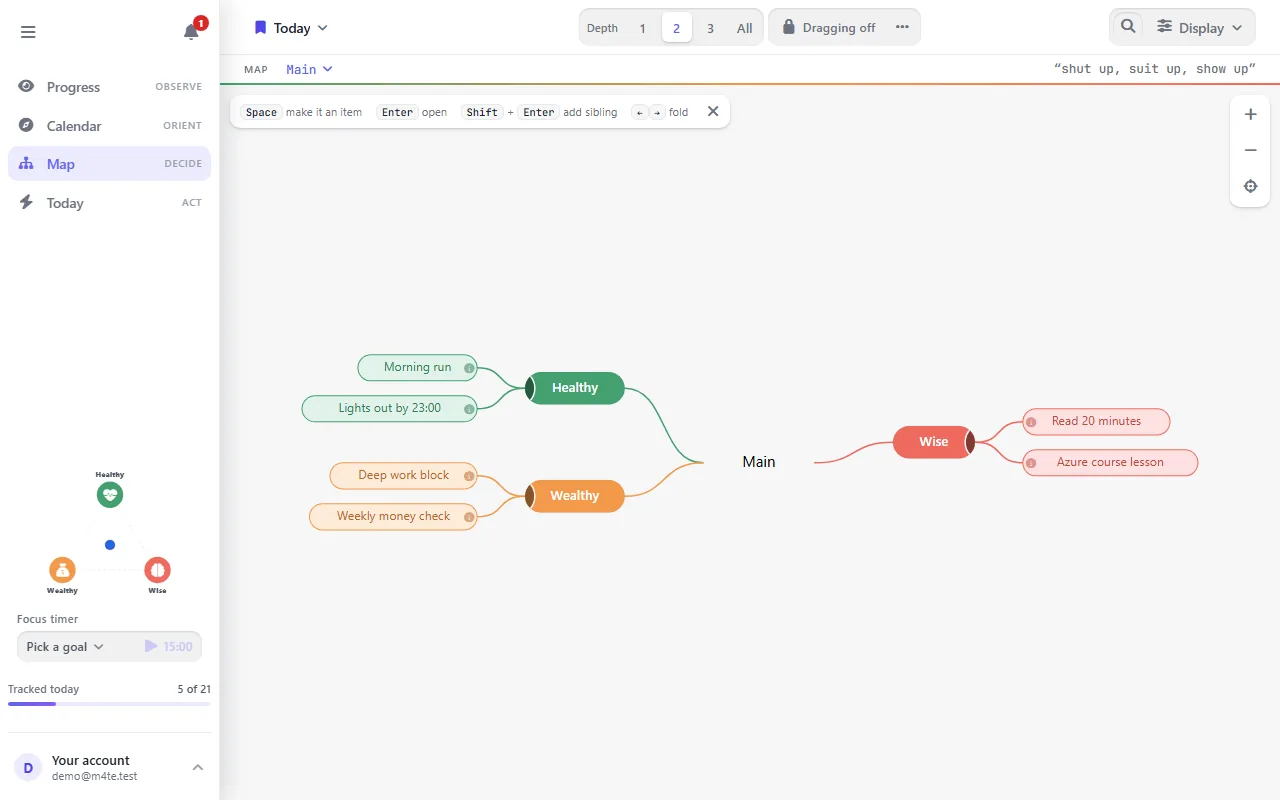
Decide on the map: every habit hangs off what it serves, so nothing gets on the list without a reason.
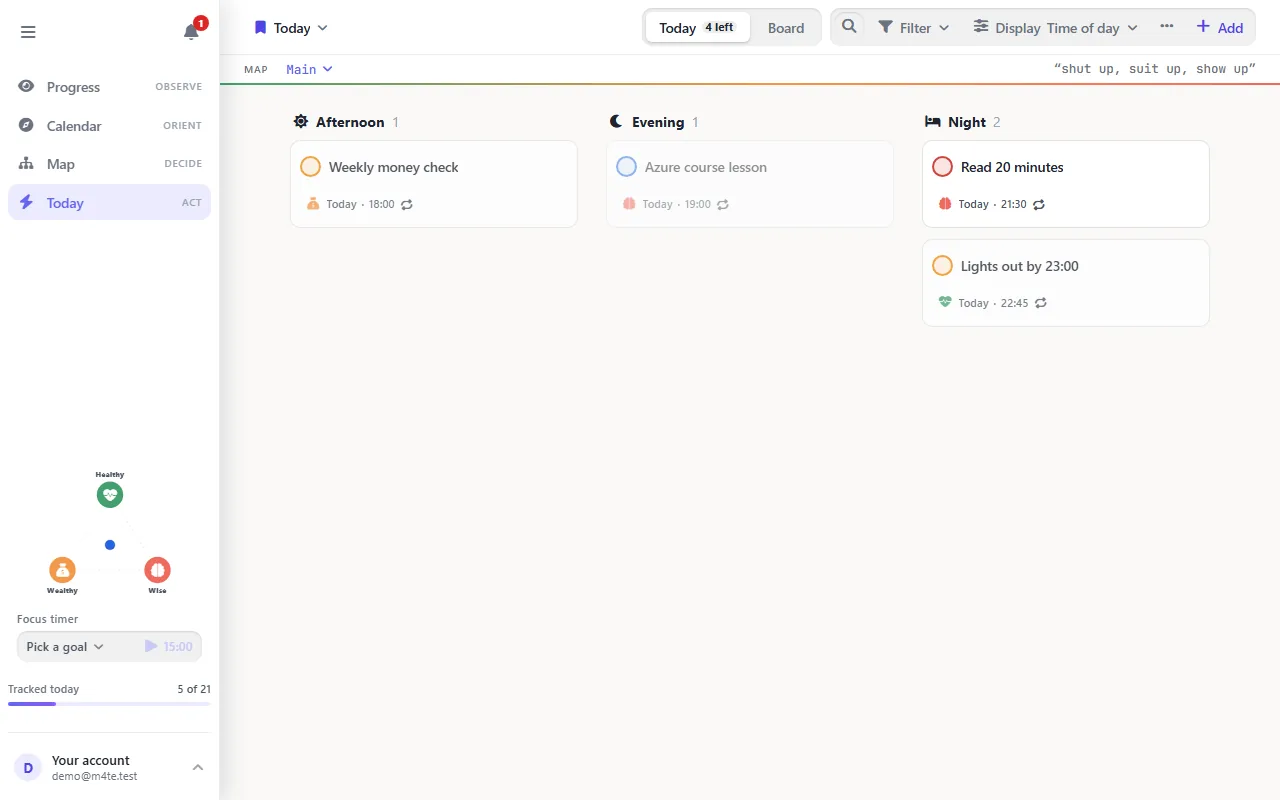
Today, grouped by time of day. Done items step aside, and the sidebar counts what is tracked against your limit.
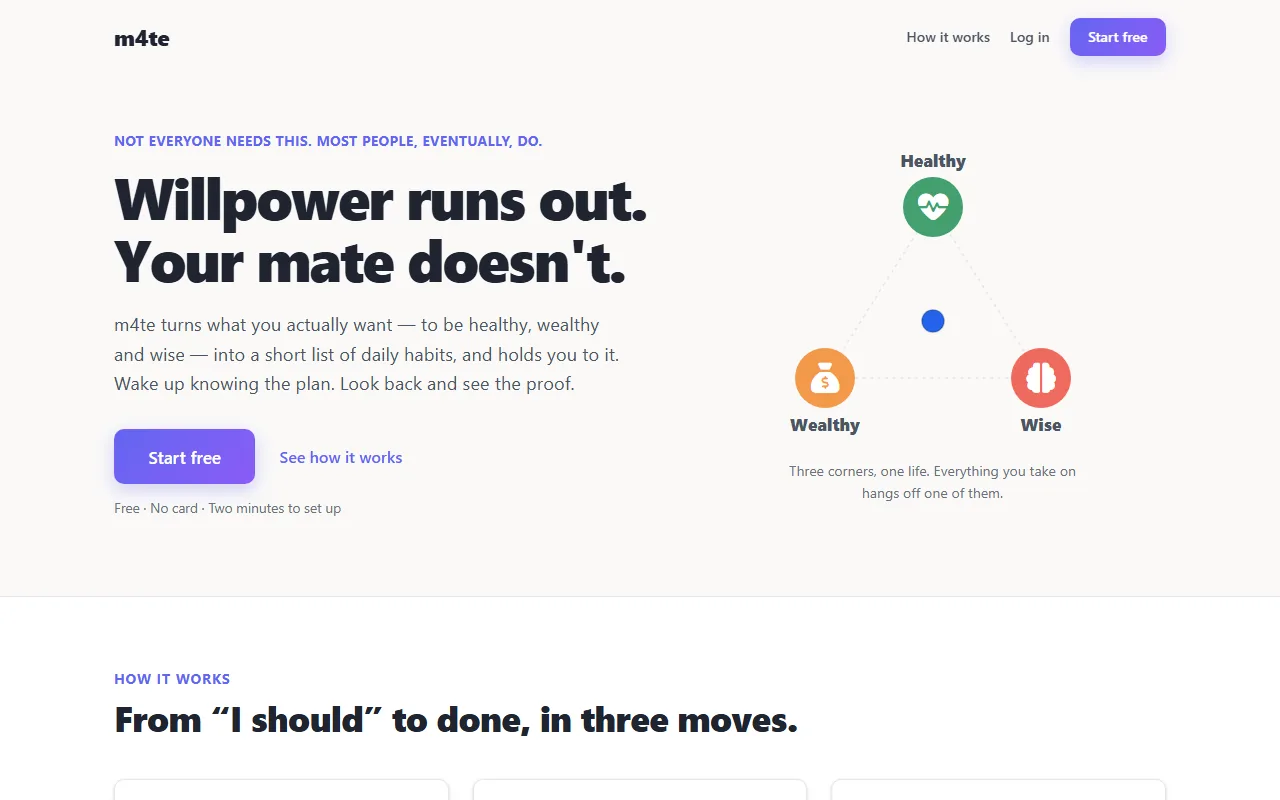
The public home page. Signed-in screens here use a demo account with sample data, not my own.
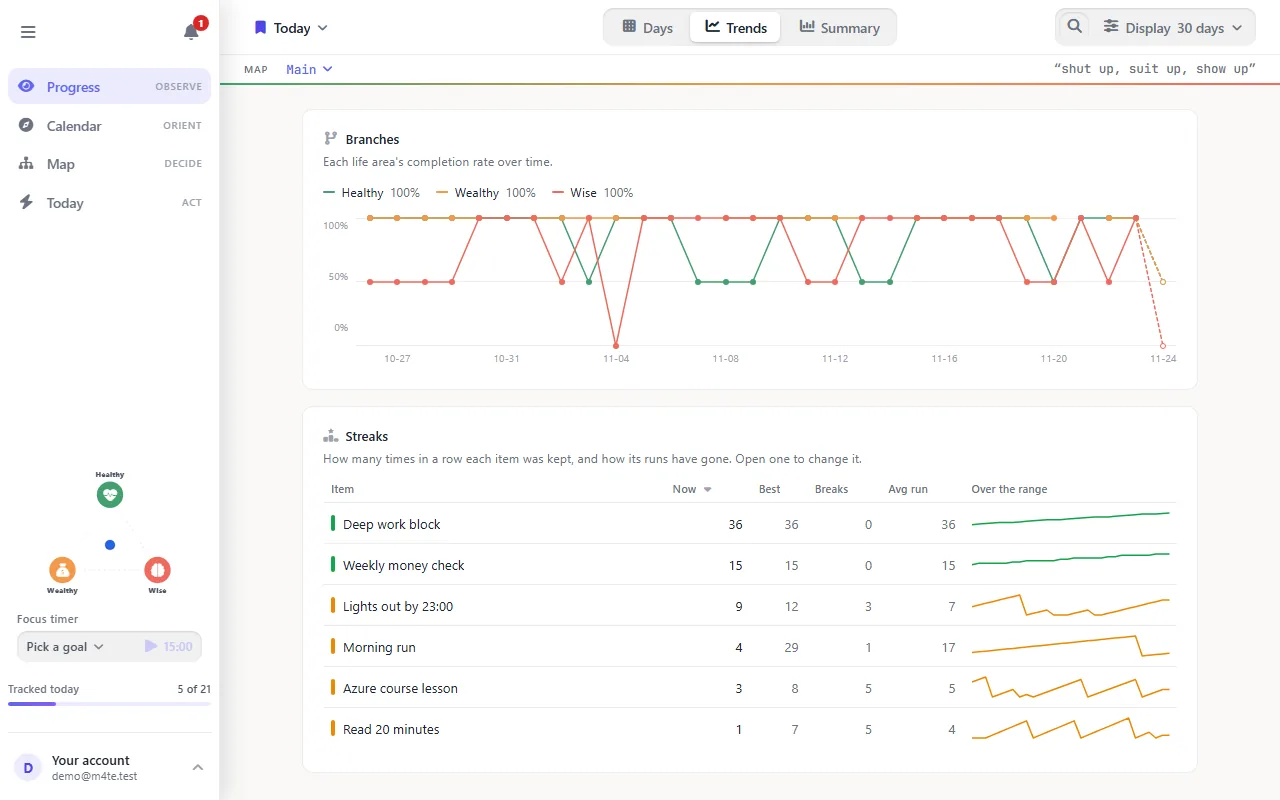
Turns long-term goals into a short daily list and holds you to it. I use it every day; it is also where I built and tested the whole way of working described below.
Every behaviour is a numbered requirement in the spec, and each requirement points at the code that implements it. Clean Architecture keeps the rules in plain C#, apart from storage and the web.
A daily AI coach, plus connections to Todoist, Google Calendar and Instapaper, and a morning email.
The spec-first process below started here and now runs Haftam and Oturdum too; the review agents and scheduled Claude runs live in this repository.
.NET 10
ASP.NET Core
Azure Functions
Table and Blob Storage
Angular PWA
Claude API
How a change ships
AI writes code fast. Without rules it also drifts fast: features nobody asked for, quiet regressions, a design that slowly falls apart. So I engineered the process, not only the prompts. Every change, mine or Claude's, goes around the same loop.
IntentWhat and why, with every decision, its date and the option I rejected.
SpecNumbered requirements. I approve them before any code is written.
TestsEach acceptance criterion becomes at least one test.
CodeClaude Code writes it, inside the guardrails below.
ReviewA CI gate and a Claude reviewer on every pull request.
ShipA merge to main deploys to Azure, refusing any older commit.
WatchErrors in production open a new intent issue, and the loop starts again.
If the code has to differ from an approved spec, the spec changes first and goes back to me. Spec and code never disagree for long, because scripts and agents check the links between them.
Guardrails in Claude Code
Rules in a prompt get forgotten. Hooks don't: they are small, tested scripts that Claude Code runs at fixed moments, and they can add context, ask me first, or refuse.
Spec context each prompt
Finds the requirements a request is about and puts them in front of Claude before it starts. An evaluation script measures how often it finds the right ones.
Spec guard before an edit
Refuses code changes until the branch has its intent file and an approved spec.
Dependency guard before an edit
Stops and asks me before any new package is added. Version bumps pass.
Git guard before a push
Refuses to push to a branch whose pull request is already merged, so follow-up work is never lost.
Comment guard before an edit
Refuses an edit that adds over-long comments. A comment should state a decision, not retell the code.
Run checks before “done”
Runs the cheap CI checks when Claude tries to finish, so a failure goes back to Claude, not to the deploy.
Every guard decision is logged, and a report shows what the guards blocked or allowed over the last month. That is how I know which rules earn their place.
Claude on a schedule
On m4te, the same rules also run in GitHub Actions, with Claude Code as a team member that works while I sleep. Everything it changes arrives as a pull request for me to merge.
Every pull requestCI gate: requirement IDs, architecture layers, fitness baselines that may not grow, and every .NET and Angular test against a real storage emulator. Then a Claude reviewer checks the diff for spec drift and design-system drift, and fixes what it finds on the branch.
On request@claude on any issue or review comment hands that task to Claude, working under the repository's own rules.
Every hourWatch production: reads server errors from Azure Monitor and opens an intent issue when they pass a threshold.
WeeklyDesign review: Claude checks every screen changed since its last pass against the design system, fixes the drift and records the commit it reached.
WeeklyProduction build: Claude refactors the week's code for clean code and SOLID without changing behaviour. The full test suite has to prove it.
WeeklySecurity scan: my own reusable action checks CVEs, leaked secrets, end-of-life runtimes, licences and the live site, and keeps one issue per repository up to date.
Read-only agents do the auditing: one reviews pull requests, and several spec auditors check one spec area each in parallel, reporting where the code and the spec disagree.
From the repos
The repositories are private, so here are short excerpts, word for word (… marks a cut), of what this looks like day to day.
A requirement, with its codedocs/spec/13-identity-and-access.md
AUTH-033 Enabling the bypass outside Development throws at startup, so a misconfigured deploy fails on boot rather than serving every caller as the same user.

AUTH-034 Enabling it against any storage but the local emulator also throws. The environment name is a label anyone can set; the storage account is where the real rows are, and this is the half of the check a wrong `ASPNETCORE_ENVIRONMENT` cannot talk its way past.

AUTH-035 The one file that enables it is excluded from the publish output, so a deploy cannot carry it.

AUTH-037 The bypass and both production configuration files are pinned by tests.

Code: … `src/Mate.Api/DevelopmentAuth.cs` …
The rules for a local sign-in shortcut: three separate locks, so no single mistake can put it in production, and tests that keep them in place. Every rule has an ID that code, tests and reviews cite, and a script checks that IDs are never reused.
A hook says noPreToolUse · dependency-guard
Adds a third-party package: date-fns. State why the platform is not enough and log it in THIRD_PARTY.md (CODE-012, CODE-025).
What Claude gets back when an edit adds a package; the package name here is an example. The edit waits for my answer, and a package that gets in is recorded in THIRD_PARTY.md with its reason.
Claude reviews a pull requestpr-reviewer · comment
Spec
- `src/Mate.Angular/src/app/core/services/pomodoro.service.ts:112` — POMO-039 — A remembered goal that no longer exists is treated as "none chosen" only in `PomodoroBar` (`selectedGoal()`). `PomodoroService.selectedGoalId` still holds the stale id, and `toggle()` reads it. Any start path that skips the bar's disabled/`selectedGoal()` guard could start a session against a deleted goal. Either clear the stale id in the service or confirm `toggle()` guards it.
A real finding from a merged pull request: a stale-state path traced across two files and tied to the requirement it touches.
Claude opens its own pull requestDesign review · weekly
What I changed: added `design-audit-ok` annotations with reasons on those two handlers, plus the intent file. No behaviour changed.

Left alone: … I did not look at the pages in a browser, since this CI run has none.

Verification: design-audit clean; `ng build` OK; `ng test` 1589 passed.
The scheduled runs report what they checked and also what they could not, so I know exactly what I am approving.
A decision on recorddocs/intent/rebuild.md
Decision
Chosen
Rejected
Map queries
Partition by 5-character geohash cell (~4.9 km); a viewport reads only the cells covering it
Scanning all rows; Azure AI Search (cost)
Maps and geocoding
Google Maps JS + Places + Geocoder behind a MapProvider adapter
Azure Maps (weaker Turkish street numbers); MapLibre + OSM (weaker geocoding)
Each decision keeps its date and the option I turned down, so the next person, or the next Claude session, knows why.
My part
Architecture
Clean Architecture in .NET, Angular front ends, Azure App Service, Functions and Storage chosen for low running cost, and deploys with no stored cloud passwords.
Specs and decisions
I write and approve every spec, and record each decision with the option I rejected, so the reasons outlive the chat that produced them.
Quality system
The hooks, checks, agents and schedules above are my design, and they are tested like product code.
What it shows
I can lead AI-assisted delivery on a team: fast, but measurable, reviewable and safe to put in production.